
Franklin County Criminal History Checks
No single public tool holds every Franklin County criminal record. Start with the event you need. A filed misdemeanor or traffic case belongs first in General District Court. A felony may appear there for its preliminary stage and later in Circuit Court after certification or indictment. The Juvenile and Domestic Relations District Court holds certain adult family-related cases, but confidential juvenile matters do not appear in the public online search. An incident narrative or booking sheet remains with law enforcement, while an identity-linked statewide history comes from the Virginia Department of State Police.
A sound Franklin County search moves from the fastest index to the custodian's source file. Keep the court level, case number, dates, and spelling variants as you work. A shared name is not enough to prove identity, and a missing online result is not proof that no record exists.
- Search Virginia's court system by name, case number, or hearing date and select the right Franklin County court level.
- Compare the charge, event date, court, and case number before treating a result as a match.
- Ask the proper clerk for pleadings, orders, an archived file, or a certified disposition.
- Use the arresting agency and sheriff request channel for incident, arrest, booking, warrant, and media records.
- Order the consent-based state history when an official Virginia compilation is needed for your own review.
For a close look at the county's court sequence, the Franklin County court case lookup follows a charge from the district level through disposition. It helps separate a docket entry from a full criminal-history product.
No One-Click Franklin County Record Search
The Franklin County records ladder has distinct rungs. Virginia OCIS is the free public court index. The clerks maintain the actual court files. The sheriff or a town police department keeps the report it created. Franklin County Jail and Western Virginia Regional Jail hold different parts of the custody story, while VINE supplies custody status and notifications where data is available. VSP CCRE receives reportable arrest and disposition data, and VADOC becomes relevant after a state sentence or state supervision.
Timing explains many apparent conflicts. A new arrest may be known to the jail before a court filing exists. A charge may later be amended. A disposition can take time to reach the central repository. Searchers should follow dates and identifiers instead of treating one row as the whole record.
Record flow: Arresting agency › jail and magistrate › Franklin County courts › VSP CCRE › VADOC when state custody or supervision applies.
Official Background Checks in Virginia
The official general-public route is the Virginia Criminal History Record Check using Form SP-167. It is not an anonymous instant search. The subject signs before a notary, and a different results recipient must complete and notarize the recipient section. One printed form is mailed for each subject. The base Virginia history costs $15, while the combined history and sex-offender option costs $20. VSP states that normal processing takes about 15 business days and its FAQ gives a 15 to 20 business-day range after receipt.
The online generator prepares paperwork; it does not return a screen of results. VSP's own material also draws a key scope line: a name-index comparison may return Virginia conviction data, yet a response with no Virginia conviction data does not rule out an arrest. For a personal nationwide review, the FBI Identity History Summary is a different product. Statutorily authorized fingerprint checks pass through the requesting agency and VSP CARE rather than a universal public walk-in service in Franklin County.
The official VSP page shows the state process in context. Review the source for the SP-167 procedure before using the captured view below.
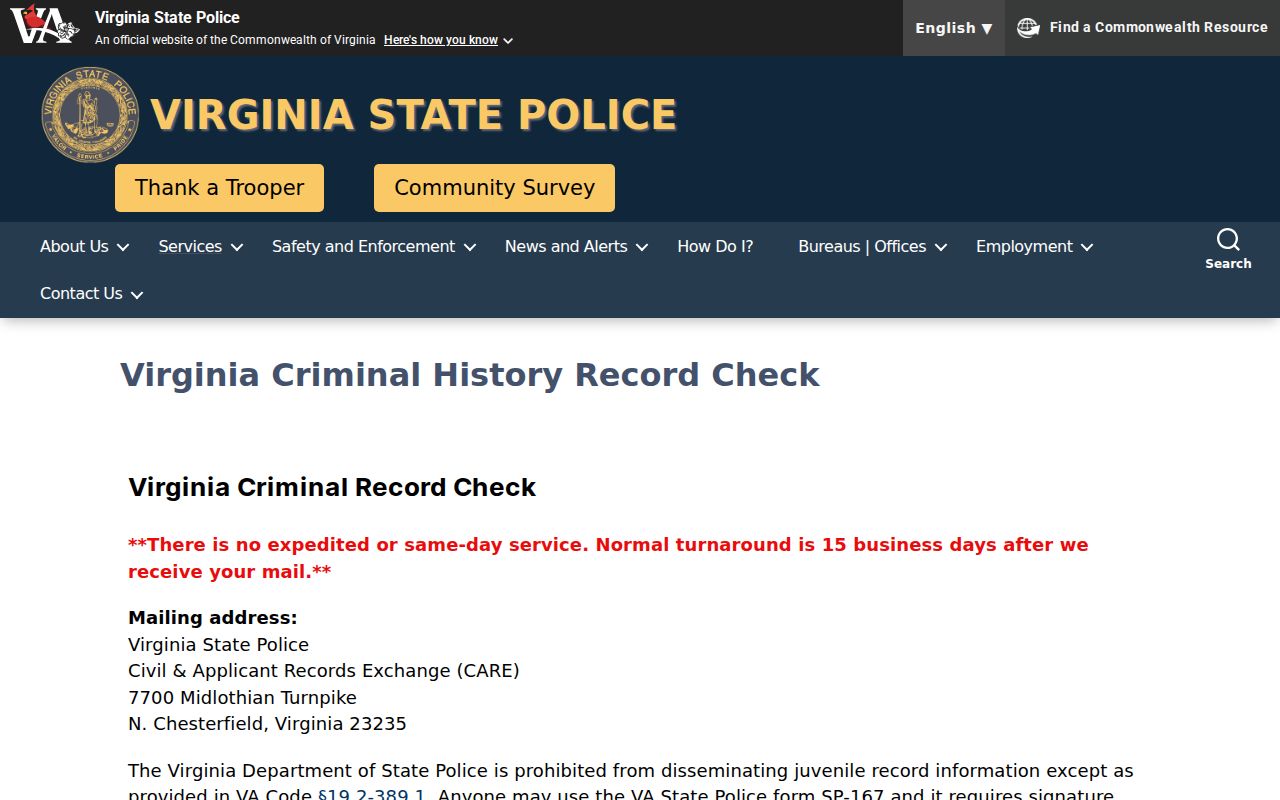
The image reinforces that the official route depends on signed paperwork, identity details, and agency processing rather than a quick county name search.
Three Franklin County Criminal Record Views
OCIS, SP-167, and booking data answer different questions. Use the court file to understand what was filed, how the charge changed, what plea was entered, and how the judge disposed of the matter. Use SP-167 for the identity-linked Virginia compilation that VSP is permitted to release. Use booking data to establish custody at a time and place, the arresting agency, initial charge, bond, transfer, or release. None should be used as a substitute for the others.
| Source | Best evidence | Important limit |
|---|---|---|
| OCIS and clerk | Case number, hearings, filed charge, plea, disposition, orders | Not a statewide fingerprint-linked history |
| VSP SP-167 | Official Virginia criminal-history product released under state rules | Not a police narrative or packet of pleadings |
| Jail booking record | Intake, custody, bond, transfer, and release details | Booking proves custody, not guilt |
When a name is common, compare the official identifiers that each lawful source provides. If a VSP entry appears wrong, collect the certified court disposition and arresting-agency event details, then ask VSP CARE how to correct the mismatch.
Kinds of Criminal Records
Franklin County records are created at each step of a case. The police report may include a narrative, location, alleged offense, and evidence, although investigative portions can be withheld. A magistrate may issue a complaint, warrant, and bail record. The jail makes its own intake and custody file. Court clerks then maintain the filed charge, hearings, plea, disposition, sentence, and orders. VSP CCRE connects reportable arrests with outcomes received from justice agencies.
The label on a record matters. A capias is court-issued arrest process. An indictment is a grand jury's felony charge. A nolle prosequi means the Commonwealth chose not to prosecute at that time. A dismissal ends the charge without a conviction, but it does not by itself erase every police or booking file.
- Disposition
- The court's recorded outcome, such as conviction, acquittal, dismissal, or nolle prosequi.
- Preliminary hearing
- The General District Court hearing that tests probable cause before a felony can move onward.
- Appeal de novo
- A new Circuit Court trial after an appeal from a district-court judgment.
- Expungement
- A court process that removes a qualifying record from ordinary access under Virginia law.
- Sealing
- A separate Virginia access restriction that now includes automatic and petition-based paths for listed matters.
Franklin County Jail Record Gaps
Franklin County publishes no official public jail roster, daily booking log, or mugshot gallery. The correct fallback begins with the Franklin County Sheriff and Jail at 70 East Court Street in Rocky Mount, 540-483-3000. Ask whether the person was booked locally and whether a transfer occurred. Franklin has used Western Virginia Regional Jail for pretrial detainees, local sentences, and people awaiting VADOC transfer, so a local arrest does not guarantee current housing at the East Court facility.
VINE can add custody status and notice options, but it is not a complete jail roster. A sheriff records request may seek releasable booking time, arresting agency, charge, bond, court, transfer, release, and other specific fields. Once the case is filed, OCIS and the clerk take over as the stronger sources for the charge and outcome. For the complete fallback chain, use the Franklin County arrest search rather than an unofficial booking site.
Franklin County Criminal Records: What They Contain
The contents depend on the custodian. A Virginia repository record may connect names and aliases, limited identity data, fingerprints, arrest date and agency, a Virginia Crime Code or statute, court and case number, disposition, sentence, and corrections information. Public products protect Social Security numbers and restrict juvenile, victim, expunged, and sealed data. OCIS adds hearing and pleading details, but its online result is not a certified copy.
| Name and identifiers | Names, aliases, birth information, and agency identifiers as law permits the product to show. |
|---|---|
| Arrest and booking | Event date, arresting agency, intake, charge, bond, custody, transfer, or release in the proper source. |
| Charges and statutes | Original or amended allegation, code section, and class or modifier where recorded. |
| Disposition | Plea, hearing result, final outcome, and disposition date in the court file. |
| Sentence | Confinement, suspended time, costs, restitution, or supervision when ordered and public. |
| Custody or supervision | Separate local jail, VINE, or VADOC information based on the person's current status. |
The Franklin Circuit Clerk explains its criminal-file role on the county site. Open the official clerk source before viewing the page capture.
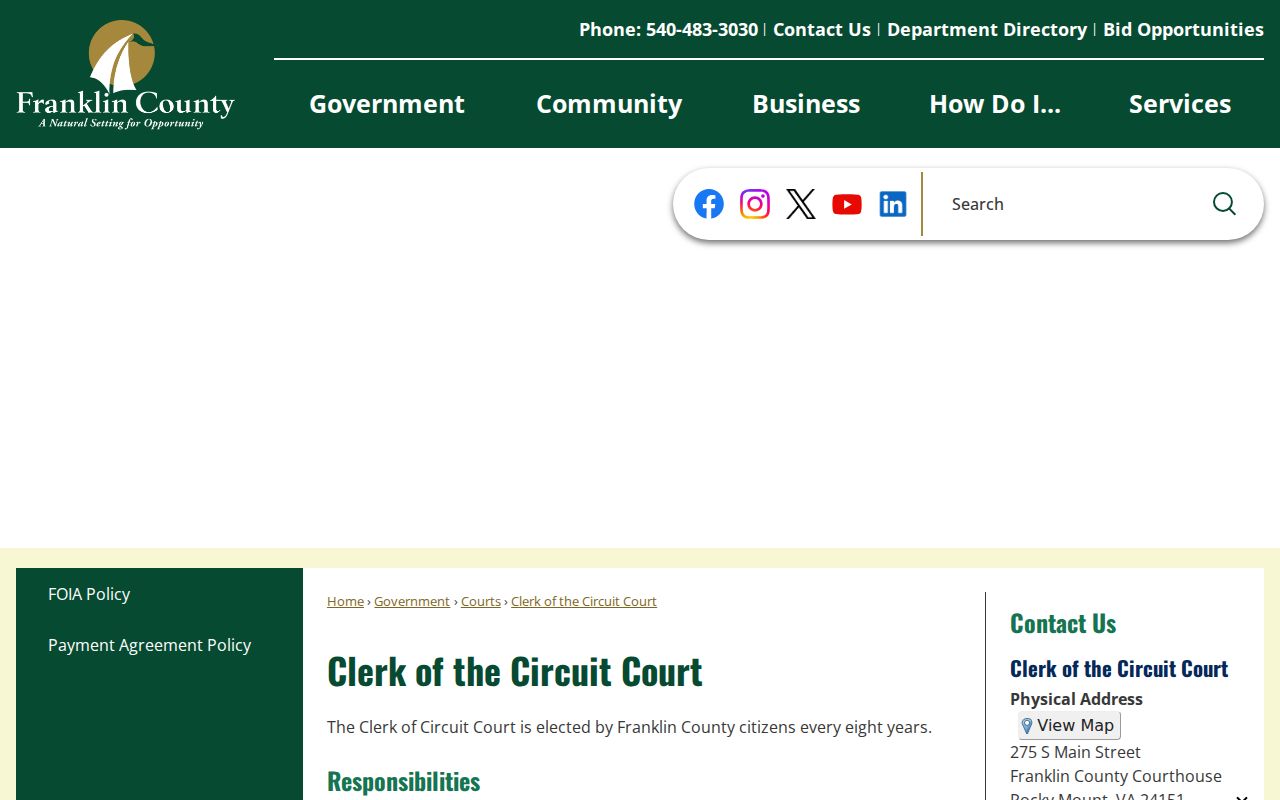
The clerk source identifies the office that preserves indictments, criminal orders, felony files, and appeals rather than law-enforcement narratives.
Franklin County Records Through NextRequest
Franklin County launched its CivicPlus NextRequest portal on November 14, 2025. It supports request submission at any hour, email confirmation, status tracking, digital delivery, redaction, and an audit trail. It is a county public-records channel, not a court-case database. Use it for records held by county departments and send sheriff-created incident, arrest, booking, warrant, body-camera, or E911 requests to the sheriff's own form when that is the named channel.
A VFOIA request need not be written or use the word FOIA, but a precise written request is easier to track. Name an existing record, date range, event location, office, and desired format. The county need not answer a general question or create a new document. A requester may inspect records, ask for copies, seek an advance cost estimate, and request an electronic format the county already uses.
The county's portal is the best source for its current workflow. Visit Franklin County NextRequest before consulting the captured interface.
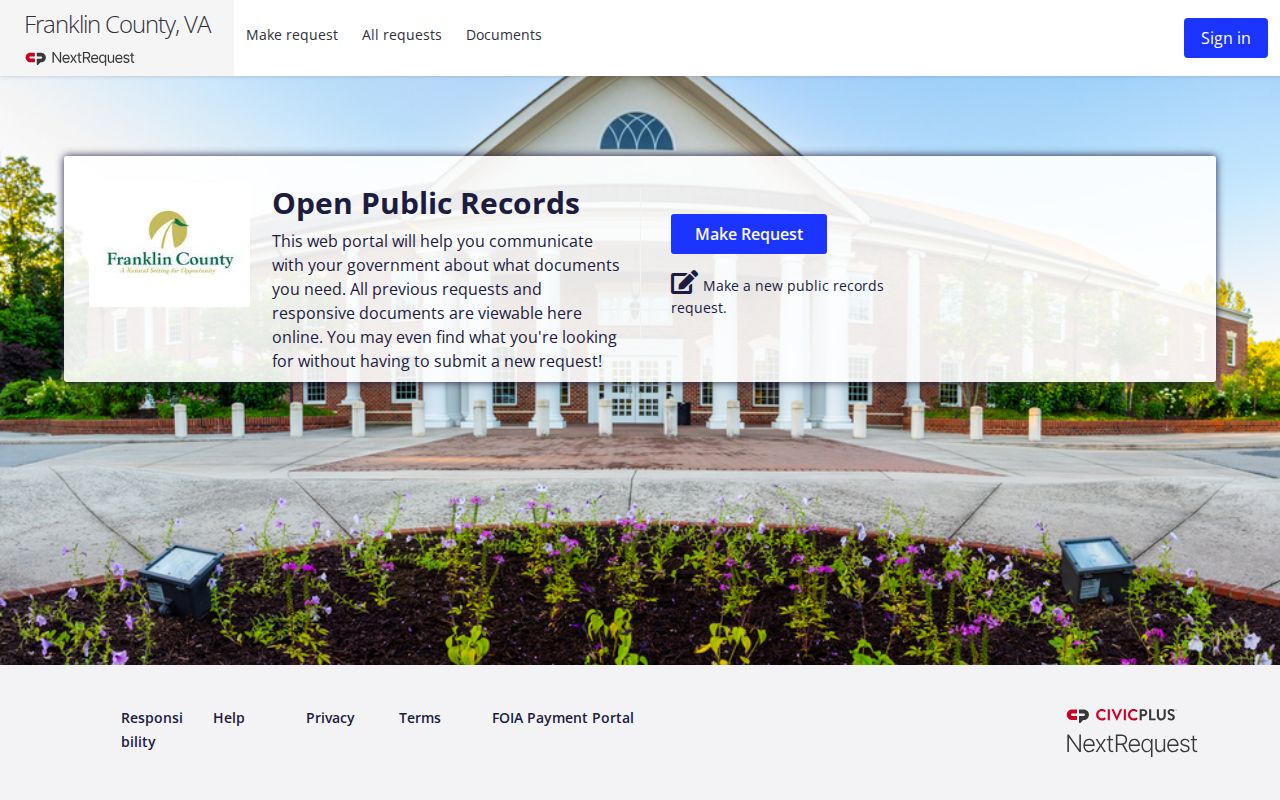
The portal view shows why request tracking and record searching are separate tasks: NextRequest routes a request to a custodian instead of returning a criminal-history profile.
Virginia Public Access Laws
Virginia law starts with access but preserves firm boundaries. The Virginia Freedom of Information Act applies to public-body records, subject to exemptions and procedure. Law-enforcement provisions require release of specified adult arrest, charge, and incident information while protecting material tied to active investigations, juveniles, victims, or sealed matters. CCRE dissemination follows its own statute. Court-clerk judicial records are generally inspected under the separate court-record law rather than ordinary VFOIA.
Key statutes:
Virginia Code §§ 2.2-3700 et seq. presumes public-body records open unless a law supplies an exemption.
Sections 2.2-3706 and 2.2-3706.1 set the release and withholding rules for criminal incident, arrest, and investigative material.
Section 19.2-389 controls who may receive CCRE information and how it may be used or passed on.
Section 19.2-389.1 restricts dissemination of juvenile criminal-history information.
Sections 19.2-392.2 and 19.2-392.5 et seq. govern expungement and sealing.
The county also publishes a practical access-rights explanation. Read Franklin County's VFOIA guidance before using the captured county page.
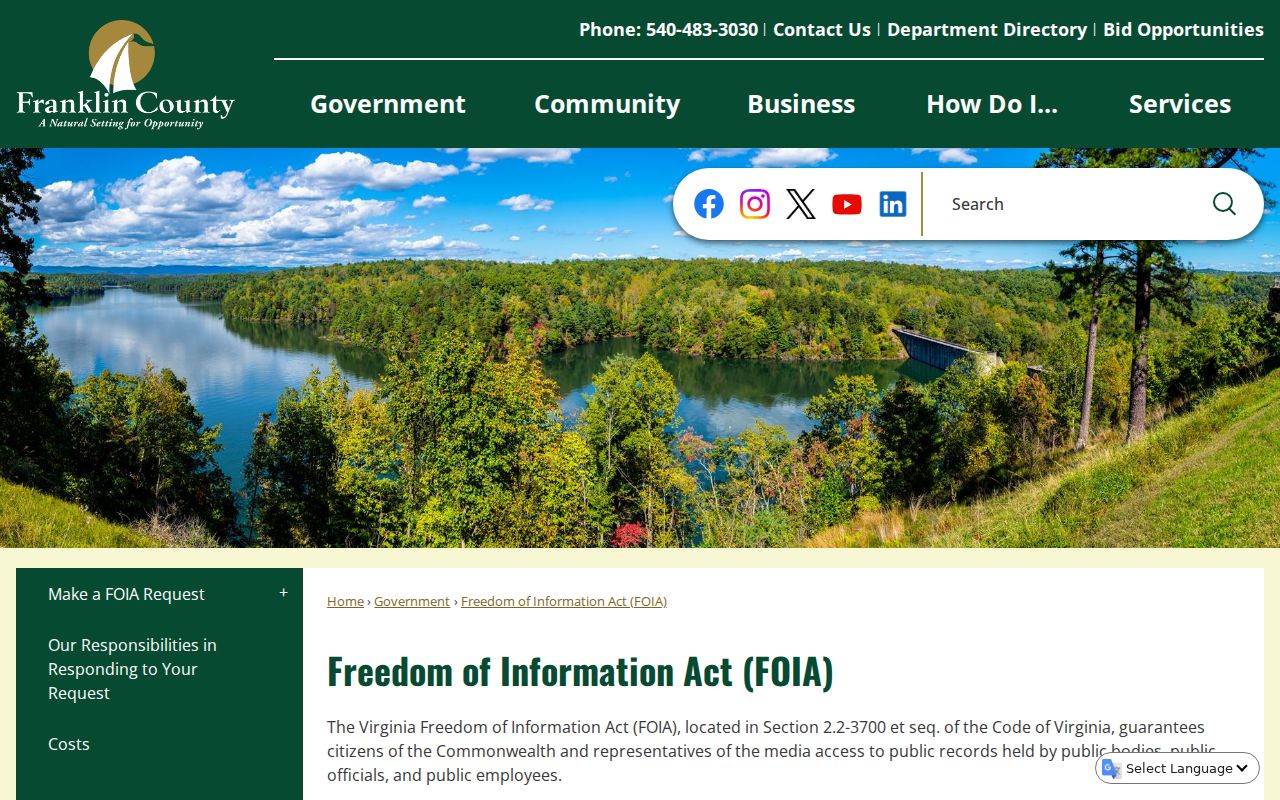
The county guidance connects the state right of access with local request methods, response choices, estimates, and the duty to describe the sought record.
Franklin County Warrant Record Checks
There is no official public Franklin County active-warrant database, Most Wanted search, or sheriff app. Public checking uses a chain of official contacts. Call the sheriff at 540-483-3000 or request releasable warrant information from that office. The Magistrate's Office at 70 East Court Street, Suite 105, answers process questions at 540-483-3076. Search OCIS and call the issuing court for a related case or capias.
A blank court search is not a clearance certificate. A new warrant may not yet connect to a public case, and sealed, juvenile, or investigative process may be withheld. Anyone resolving a possible warrant should confirm the issuing court, case number, current bond terms, and surrender procedure before appearing, because an arrest may occur.
Franklin County's government directory is a reliable starting point for current office routing. Check the county's official directory before relying on an older phone listing.
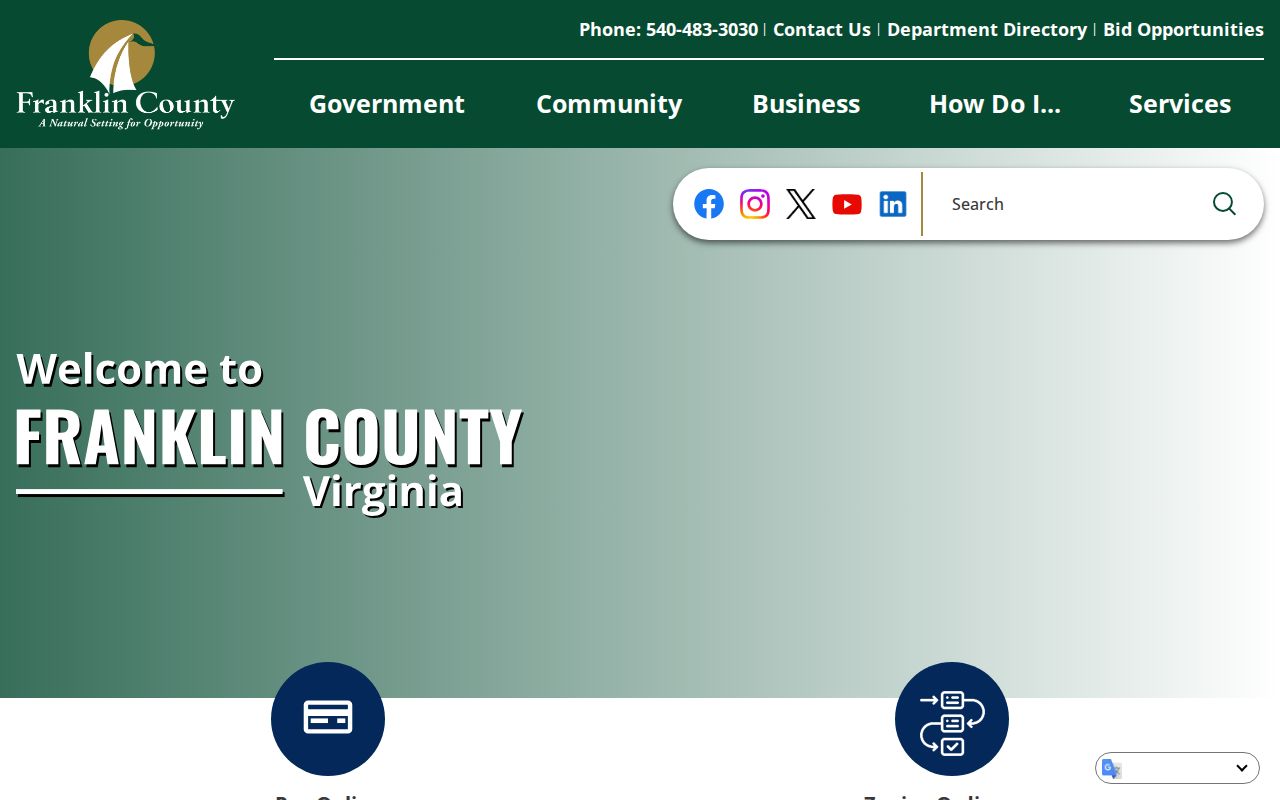
The directory helps route a request to the sheriff, clerk, or other actual custodian when no public warrant search exists.
Restricted, Sealed & Expunged Records
Juvenile CCRE information, protected victim identities, sensitive personal data, and parts of an investigative file can be restricted. Traditional Virginia expungement primarily reaches acquittals, dismissed or nolle prosequi charges, identity errors, qualifying actual-innocence pardons, and specified vacated convictions. It is not a broad eraser for every valid conviction. A Franklin filing goes to Circuit Court, and the case-specific fee should be confirmed through the clerk and official fee calculator.
Virginia's broader sealing system began July 1, 2026. Listed cases may qualify for automatic or petition sealing, but major felony classes and many violent, sex, firearm, protective-order, hate-crime, animal-cruelty, and family offenses are excluded. Petition waiting rules vary, and eligibility cannot be decided from the offense class alone. Use the exact court form for the category and preserve certified proof of any order.
A dismissed charge does not vanish from every law-enforcement or booking system on its own. After a sealing or expungement order is processed, recheck the official court, VSP, and agency sources. If an entry remains, send the certified disposition and order to the custodian that maintains it.
Franklin County Custody and Supervision Records
The Virginia Department of Corrections holds the state custody and supervision layer. Its Inmate & Supervisee Locator can include state prisoners, VADOC-supervised probationers or parolees, people in local or regional jails under VADOC authority, institutional-hospital placements, and Community Corrections Alternative Program participants. It updates daily, but VADOC warns that a result may be inaccurate or out of date.
Search by the full last name and the first three letters of the first name, or use a seven-digit DOC ID. Location, race, gender, and age-range filters can narrow the result. The locator does not expose private supervision notes, conditions, testing, treatment, or risk assessments. OCIS remains the source for a public sentencing or revocation docket, while VINE is the better custody-notification layer for participating jail data.
VADOC describes the public locator and its limits. Open the official VADOC locator before using the captured search view.
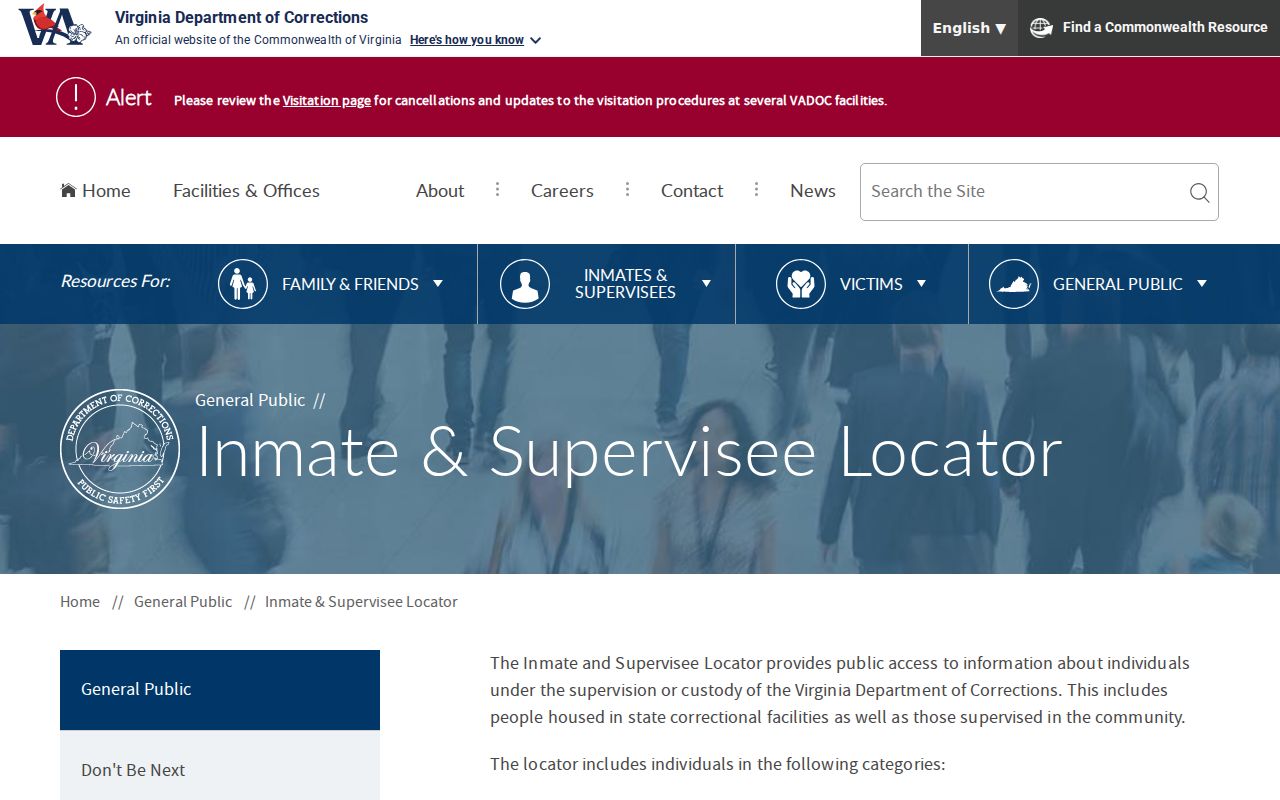
The captured interface shows the state-level identity fields, which are useful only after the local custody or court record points toward VADOC authority.
City-by-City Criminal Records in Franklin County
Franklin County has two incorporated municipalities. Rocky Mount and Boones Mill each operate a police department, but neither has a municipal court or town jail. A town incident report stays with the police agency that made it. Adult traffic and misdemeanor cases go to Franklin General District Court, while a felony can move to Circuit Court after its district stage. The two local guides preserve those different request paths without adding unincorporated Ferrum as a city.
Rocky Mount Record Check
Population 4,971 · Town police records begin on North Main, while cases move through the county courthouse.
Boones Mill Record Check
Population 260 · Police email and Town FOIA are the local paths before Franklin County court review.
Franklin County Criminal Records Since 1909
The present Franklin County courthouse reflects a much older custody of public files. The 1909 Beaux-Arts and Roman Revival building replaced an 1831 brick courthouse, which had followed a 1786 log structure. Circuit criminal records, indictments, and orders are preserved in Suite 212. General District criminal and traffic files are handled in Suite 111, J&DR matters in Suite 3, and the Commonwealth's Attorney works from Suite 33. The shared address can hide those distinct counters, so name the court level before asking for a file.
The county's Circuit Clerk access policy sets the practical route for judicial records. Requests may be made by mail, through the official email channel, or in person. Circuit copies cost $0.50 per paper or electronic page, certification adds $2, and a triple seal costs $2.50. Extensive work may be billed at the lowest-paid employee rate, and a deposit can be required when estimated charges exceed $200.
The clerk's access policy connects the old courthouse with present record rules. Read the official Circuit Clerk policy before viewing the saved county page.
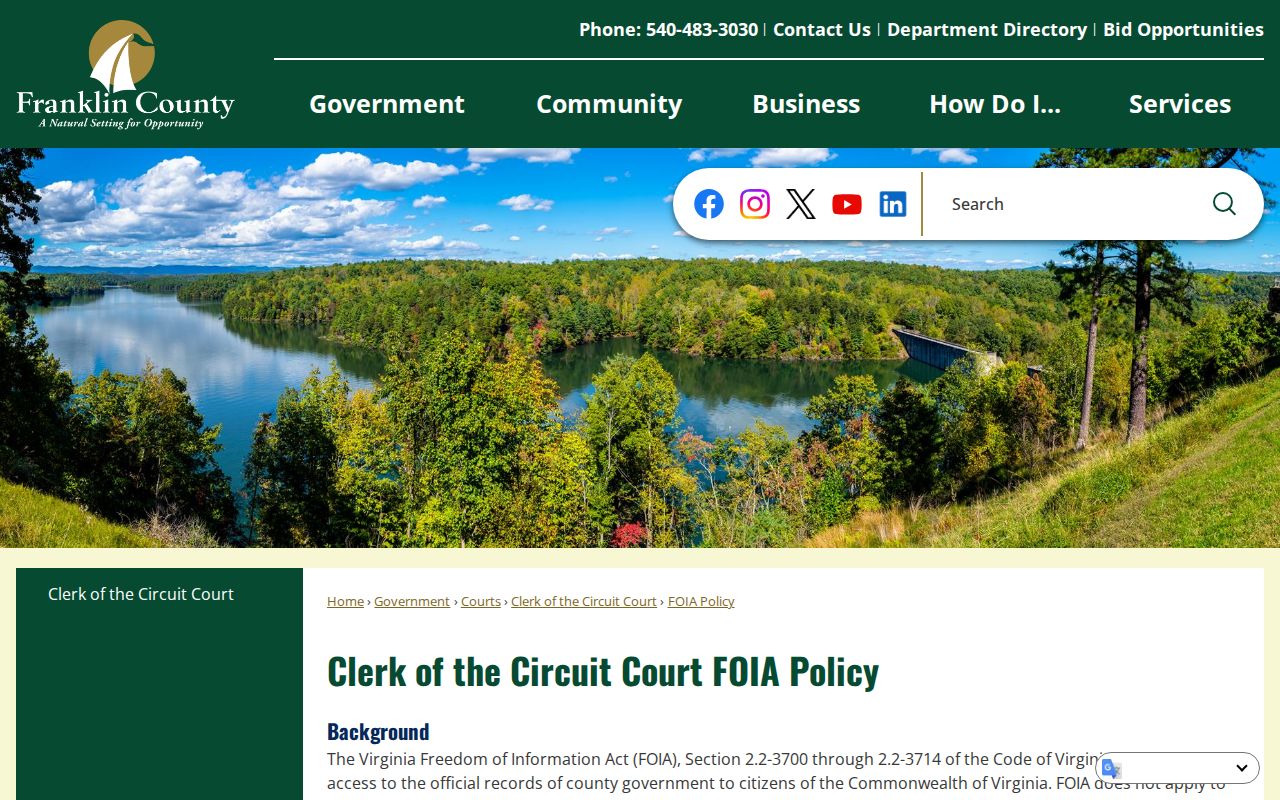
The policy confirms that the court file has its own inspection law, copy charges, and certification path apart from ordinary county FOIA records.